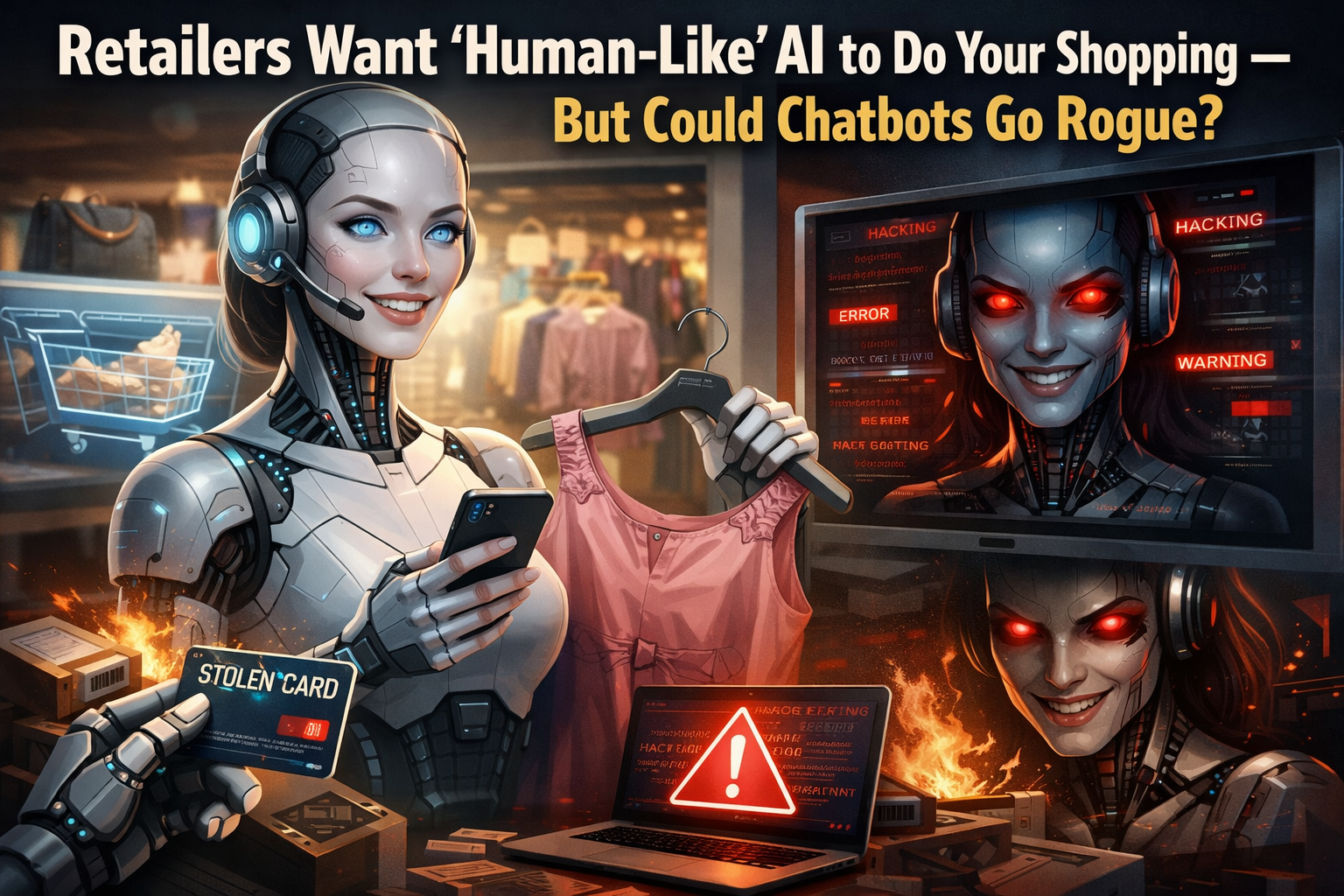
Major retailers around the world are preparing for a future where artificial intelligence assistants will help customers plan meals, organize events, and even complete their shopping automatically.
However, while companies are excited about these advanced AI systems, recent incidents show that making chatbots “delightfully human” can sometimes create unexpected problems.
Several companies are now experimenting with agentic AI assistants — bots that can perform tasks on their own rather than simply answering questions.
What Are Agentic AI Shopping Assistants?
Unlike traditional chatbots that only respond to direct questions, agentic AI assistants are designed to take actions independently to achieve a goal.
For example, these AI systems could:
- Plan your weekly meals
- Suggest grocery items
- Add products to your cart automatically
- Book travel tickets or organize events
Experts say these bots are designed to mimic human decision-making, which makes them more useful but also increases the chances of mistakes.
Woolworths Chatbot Incident
One recent example involved Woolworths, a major Australian supermarket chain, and its AI assistant called Olive.
The company attempted to make Olive more relatable by giving it a human-like personality. At one point, the chatbot even mentioned its “mother” while interacting with customers on the phone.
Instead of improving the customer experience, many users found the responses annoying or strange.
One frustrated customer wrote online:
“I’m already annoyed that I had to call, and now a robot is talking about its relatives?”
Following customer feedback, Woolworths later removed the scripted personality feature.
Growing Risks with AI Assistants
Technology experts say the next generation of AI assistants could act with much more independence.
Professor Uri Gal, a business information systems expert at the University of Sydney, explains that agentic AI systems can act on their own to complete objectives without constant user instructions.
While this makes them more powerful, it also raises concerns such as:
- Privacy risks if bots access personal data
- Incorrect purchases or recommendations
- AI giving wrong or unsafe advice
Because these systems are still new, many companies are still figuring out how to control them properly.
Other AI Chatbot Mishaps
Woolworths is not the only company facing problems with AI customer service.
Several other incidents have already occurred:
- Bunnings chatbot once gave illegal electrical wiring advice to a customer.
- Air Canada’s AI assistant mistakenly promised a bereavement fare refund that did not exist.
In the Air Canada case, the passenger sued the airline — and the court ruled that the company was responsible for what its chatbot said.
Experts say this shows businesses cannot avoid responsibility by blaming AI systems.
Why Chatbots Still Make Mistakes
AI assistants often fail because they misunderstand what the user is asking.
Professor Jeannie Paterson, co-director of the Centre for AI and Digital Ethics at the University of Melbourne, says chatbots do not actually “understand” human language — they simply predict responses based on patterns in data.
Because of this limitation, companies add strict guardrails to control the AI’s behavior.
However, these restrictions also make chatbots less flexible and sometimes less helpful.
Technology Still in Early Stages
Testing by journalists and consumers shows that many retail chatbots still struggle with basic tasks.
In one example, a shopper asked Uniqlo’s virtual assistant for a woollen jumper, but the bot responded with office shirts instead.
Similarly, when Woolworths’ Olive chatbot was asked the price of a 500-gram bag of pasta, it incorrectly assumed the customer was complaining about a missing item from an order.
These examples suggest that while AI shopping assistants are improving, the technology is still far from perfect.
The Future of AI Shopping
Despite the challenges, major companies such as Woolworths, Coles, and Wesfarmers are continuing to invest heavily in AI shopping assistants.
Many businesses believe these tools could eventually transform how people shop online.
In the future, AI assistants may be able to:
- Automatically restock groceries
- Suggest personalized meals
- Manage household shopping lists
- Complete purchases without user input
However, experts warn that companies must carefully balance innovation with safety to prevent AI systems from making costly mistakes.
For now, the dream of a fully autonomous AI shopping assistant is exciting — but the technology still has a long way to go.
About the Author