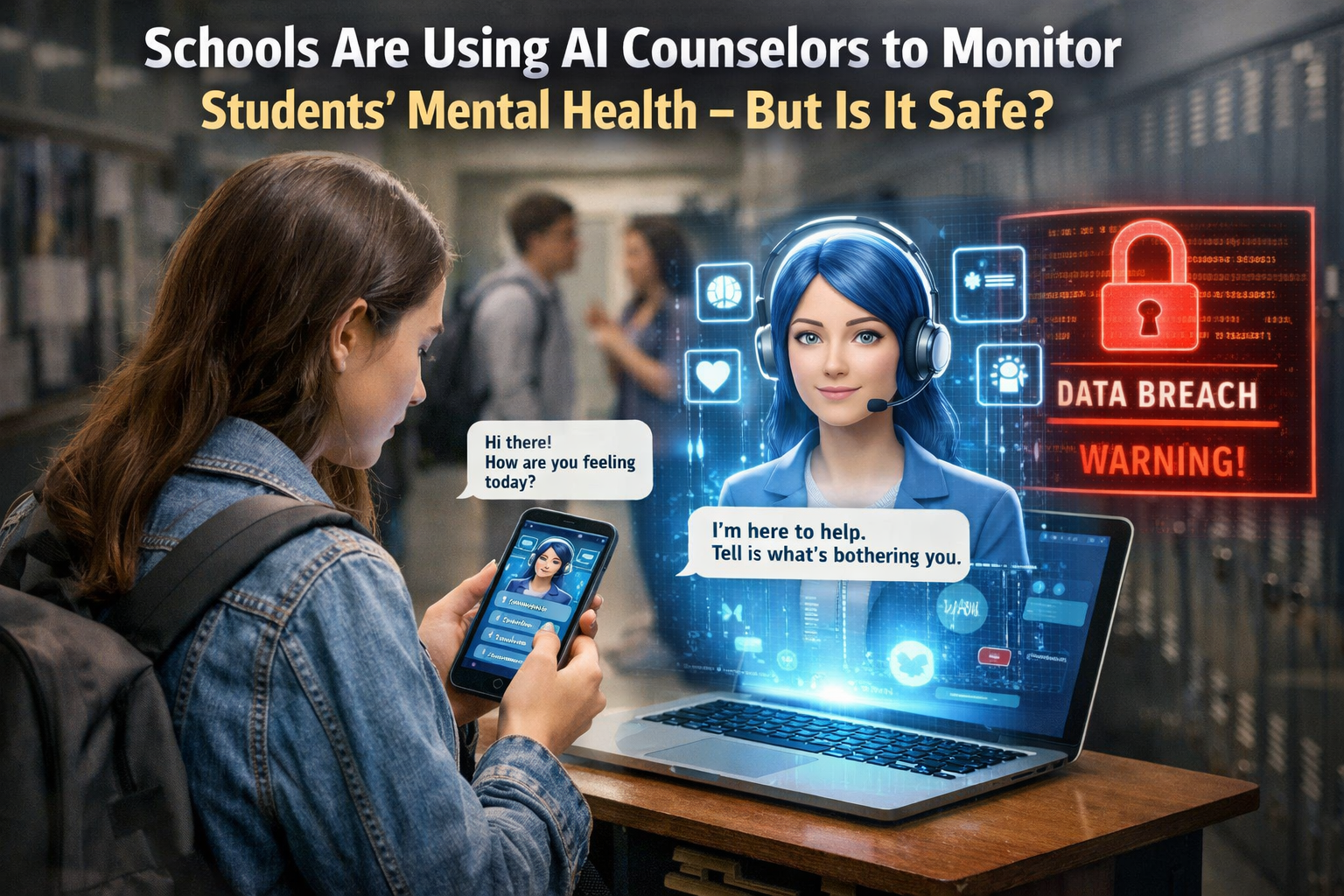
Across the United States and other countries, many schools are starting to use artificial intelligence tools to monitor students’ mental health and provide early support when someone may be struggling.
These AI-powered systems allow students to chat with a virtual assistant about their emotions, stress, relationships, or school problems. If the system detects signs that a student may be in danger or experiencing serious emotional distress, it automatically sends an alert to school counselors.
While supporters believe this technology can help identify problems early, critics question whether AI should be involved in something as sensitive as students’ mental health.
How AI Mental Health Tools Work in Schools
Many schools are using AI-based platforms that allow students to communicate through chat interfaces, similar to messaging apps.
Students can talk about issues such as:
- Anxiety and stress
- Bullying or relationship problems
- Family conflicts
- Feelings of loneliness or depression
The AI system analyzes the text messages using algorithms and large language models. If the system detects phrases that suggest self-harm, violence, or severe emotional distress, it immediately alerts school counselors.
In one case in Florida, a school counselor received a “severe risk” alert from the AI platform after a student expressed worrying thoughts in a chat. The counselor contacted the student’s parents and authorities to ensure the student was safe.
According to the counselor, the student later recovered and returned to school the following year.
Why Students Feel Comfortable Talking to AI
Some educators say that students often find it easier to share personal feelings with a chatbot than with a human counselor.
There are several reasons for this:
- Students may feel nervous talking face-to-face with adults.
- Messaging feels more natural for teenagers who grew up with texting and social media.
- Chatbots are available 24/7, even outside school hours.
- Students don’t feel judged by a machine.
Experts say that for some students, typing their feelings into a chat window can feel less intimidating than speaking about them in person.
Benefits for Schools with Limited Resources
One of the main reasons schools are adopting AI counseling tools is a shortage of mental health professionals.
Many schools have only one counselor for hundreds of students. AI tools can help by handling routine conversations and identifying students who may need urgent attention.
This allows human counselors to focus on the most serious cases.
Some AI platforms used by schools cost around $10 per student per year, making them an affordable option for districts with limited budgets.
Concerns About AI Replacing Human Counselors
Despite the potential benefits, many experts warn that AI should never replace real human mental health professionals.
Unlike trained therapists, AI cannot:
- Observe facial expressions
- Notice tone of voice
- Detect body language
- Understand complex emotional signals
Mental health experts say that these human observations are extremely important when evaluating someone’s emotional state.
Because of this, many specialists believe AI should only act as a support tool, not a replacement for real counselors.
Privacy and Data Concerns
Another major concern is student privacy.
Conversations with licensed therapists are usually protected by strict confidentiality rules. However, AI chat systems may not offer the same level of protection.
Parents and privacy advocates worry about:
- How student data is stored
- Who can access the conversations
- Whether sensitive information could be shared with authorities or third parties
Schools must carefully manage these systems to ensure student data is protected.
Emotional Attachment to AI
Researchers are also concerned that students may develop emotional attachments to AI chatbots.
Recent surveys show that some teenagers already form strong connections with AI companions.
Experts worry that if students rely too much on chatbots for emotional support, it could reduce real human interaction and weaken social skills.
Some lawmakers are even proposing regulations that would require AI systems to clearly remind users that they are not real people.
The Future of AI in Student Mental Health
Despite the concerns, many schools believe AI tools can play a valuable role in improving student mental health support.
When combined with human supervision, AI can help schools:
- Identify students who need help early
- Provide support outside school hours
- Reduce pressure on school counselors
- Encourage students to seek professional help
Experts agree that the key is balance. AI should assist human counselors — not replace them.
As schools continue experimenting with these technologies, careful oversight and clear ethical guidelines will be essential to protect students.
About the Author