Online shopping has made it easier than ever to find discounts, compare prices, and save money. Among the most popular ways to reduce your shopping costs are coupons and cashback offers. While both help you spend less, they work differently, and choosing the right one can make a noticeable difference in how much you actually save.
If you’ve ever wondered whether using a coupon is better than earning cashback, this guide explains how each option works, their advantages and disadvantages, and when you should use one over the other.
What Is a Coupon?
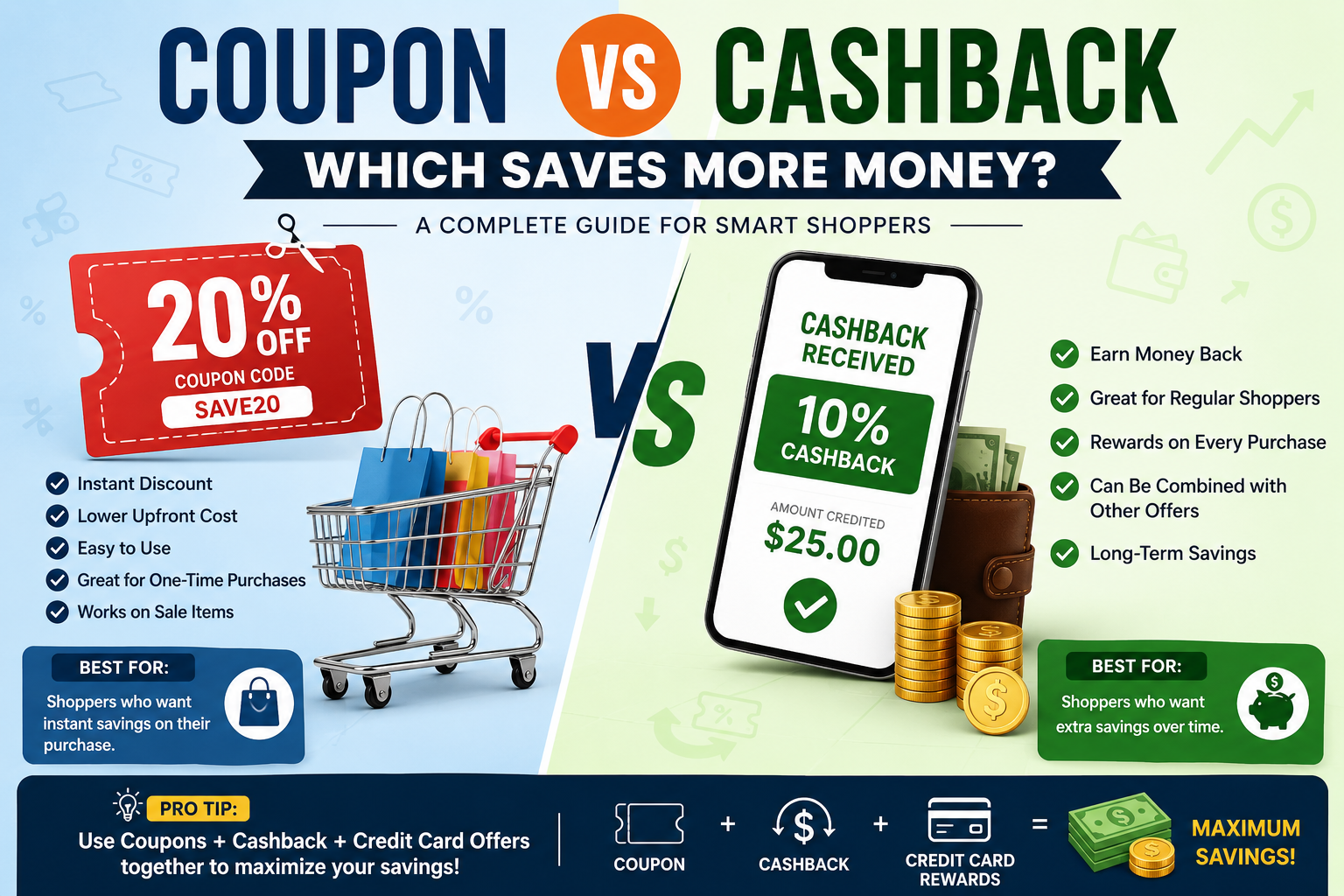
A coupon is a promotional code or discount offer that reduces the purchase price instantly during checkout. Coupons can provide either a fixed discount, a percentage off the total order, free shipping, or special promotional offers.
For example:
- 20% Off Your Purchase
- Save $25 on Orders Over $150
- Free Shipping on Orders Above $50
- Buy One Get One Free
Once the coupon is applied, your total payment is reduced immediately.
What Is Cashback?
Cashback is a reward that gives you back a percentage of the amount you spend after completing a purchase. Instead of reducing the price during checkout, cashback is credited to your cashback account, bank account, digital wallet, or loyalty balance later.
For example:
- Buy a $200 laptop.
- Earn 10% cashback.
- Receive $20 back after your purchase is confirmed.
Although you pay the full amount upfront, your final cost becomes lower once the cashback is received.
Coupon vs Cashback: The Key Difference
The biggest difference lies in when you receive your savings.
Coupons reduce your payment immediately, while cashback rewards you after the purchase is completed.
Coupons help lower the amount you pay today, whereas cashback helps you recover part of your spending later.
Benefits of Using Coupons
Coupons remain one of the easiest ways to save money because the discount is applied instantly.
Some key advantages include:
- Immediate savings at checkout
- Lower upfront payment
- Easy to understand
- Ideal for expensive purchases
- Often combined with seasonal sales
Coupons are especially useful when you’re trying to reduce your immediate spending.
Benefits of Cashback
Cashback offers provide long-term savings and can become surprisingly valuable for frequent shoppers.
Major benefits include:
- Earn rewards on every eligible purchase
- Savings continue throughout the year
- Can often be combined with credit card rewards
- Useful for recurring online shopping
- Some cashback platforms offer bonus promotions
If you shop online regularly, cashback rewards can accumulate into significant savings over time.
Which One Saves More Money?
The answer depends on the type of offer available.
Let’s compare two examples.
Example 1
Product Price: $100
Coupon: 20% OFF
Cashback: 5%
Using the coupon:
- Pay $80
- Save $20 immediately
Using cashback:
- Pay $100
- Receive $5 later
Winner: Coupon
Example 2
Product Price: $500
Coupon: 5% OFF
Cashback: 15%
Using the coupon:
- Save $25
Using cashback:
- Earn $75 back
Winner: Cashback
Can You Use Both Together?
Yes, in many cases.
Many online stores allow shoppers to combine:
- Store coupon
- Cashback website
- Credit card cashback
- Reward points
- Loyalty discounts
For example:
- Apply a 15% coupon.
- Purchase through a cashback website offering 8%.
- Pay using a cashback credit card.
This strategy can significantly increase your total savings.
However, not every retailer allows coupon stacking. Always review the store’s terms before placing your order.
When Should You Choose Coupons?
Coupons are usually the better option when:
- You want instant savings.
- Your budget is limited.
- You’re making a one-time purchase.
- The coupon offers a large percentage discount.
- You need to reduce the checkout price immediately.
When Should You Choose Cashback?
Cashback works best when:
- You shop online frequently.
- The cashback percentage is higher than the coupon discount.
- You don’t mind waiting for your reward.
- You’re making high-value purchases.
- Cashback can be combined with other offers.
Common Mistakes to Avoid
Many shoppers miss out on extra savings because they:
- Forget to compare coupons and cashback offers.
- Ignore cashback activation before checkout.
- Use expired coupon codes.
- Shop without checking seasonal sales.
- Skip reading offer terms and conditions.
Taking a few extra minutes before purchasing can often save a considerable amount.
Tips to Maximize Your Savings
To get the best value while shopping online:
- Compare multiple coupon codes before buying.
- Check if cashback is available.
- Shop during major sale events.
- Use price comparison tools.
- Subscribe to retailer newsletters for exclusive discounts.
- Combine cashback with reward credit cards whenever possible.
- Avoid impulse purchases simply because an item is discounted.
Coupon vs Cashback: Quick Comparison
| Feature | Coupon | Cashback |
|---|---|---|
| Savings | Instant | After purchase |
| Upfront Cost | Lower | Full price paid initially |
| Best For | Immediate discounts | Long-term savings |
| Ideal Users | Occasional shoppers | Frequent online shoppers |
| Stackable | Sometimes | Often, depending on retailer |
Final Verdict
There isn’t a single winner in the Coupon vs Cashback debate because the better option depends on the deal available. If your goal is to reduce the amount you pay immediately, coupons are usually the better choice. On the other hand, cashback can provide greater overall savings, especially on larger purchases or for shoppers who buy online regularly.
The smartest strategy is not choosing one over the other—it’s learning how to use both whenever possible. Combining coupons, cashback offers, loyalty rewards, and seasonal discounts can dramatically reduce your online shopping costs throughout the year.
Before completing any purchase, take a moment to compare available offers. A few minutes of research can lead to meaningful savings over time, making every shopping experience more rewarding and budget-friendly.
About the Author