
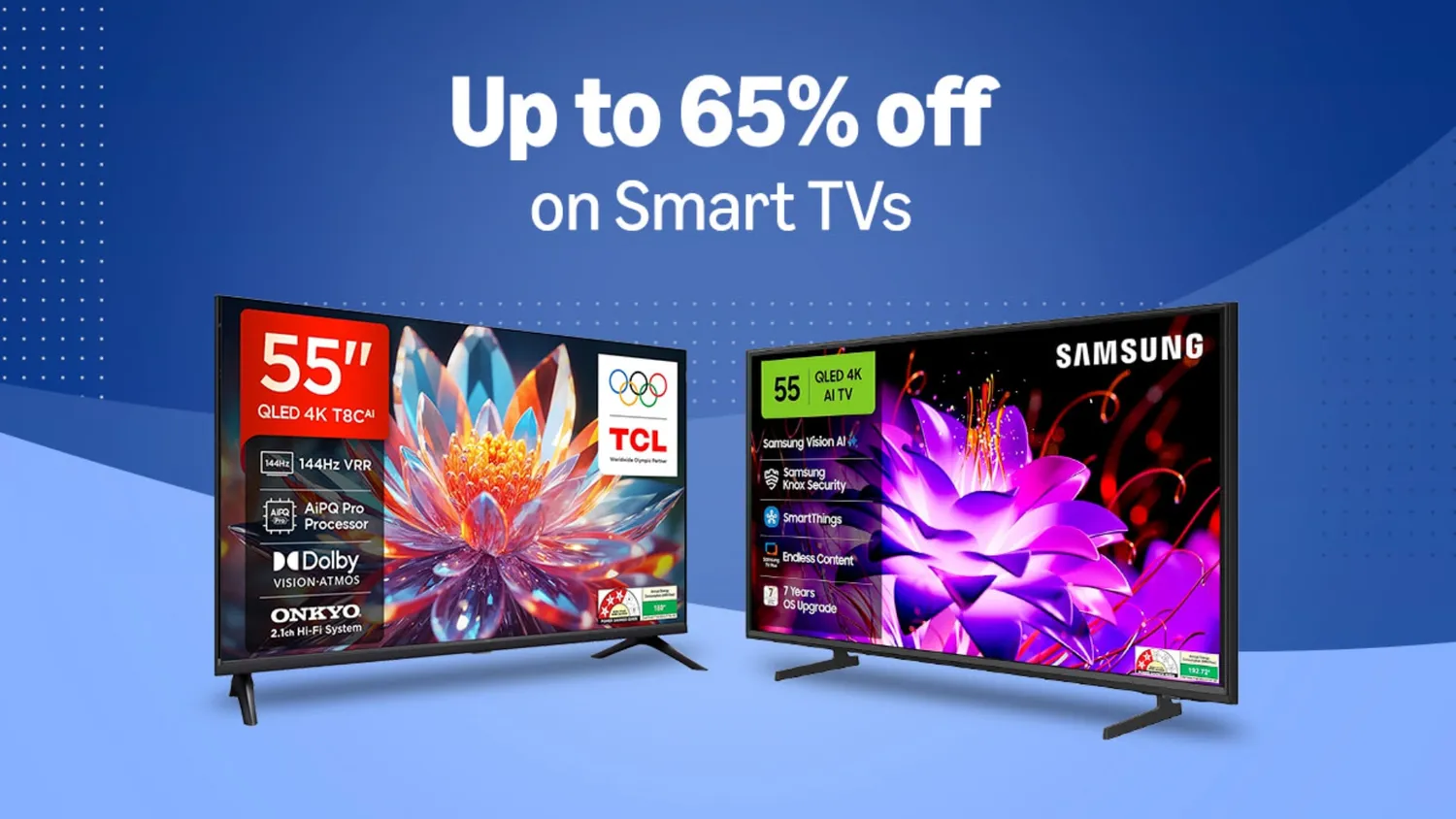
Buying a new Smart TV in 2026 does not always mean spending a huge amount of money. With the right timing, discounts, bank offers, cashback, exchange bonuses, and clearance sales, shoppers can often get a much better TV for their budget.
The key is knowing when to buy, which features matter, and how to calculate the real final price instead of simply choosing the TV with the biggest advertised discount.
Why 2026 Is a Good Year to Buy a Smart TV
The Smart TV market has become increasingly competitive. Features that were previously limited to expensive models—such as 4K resolution, QLED panels, Mini-LED technology, advanced gaming features, and modern smart platforms—are now available across more price ranges.
In India, current 2026 pricing shows that 4K TVs can be found around the ₹25,000 range, while QLED models become more accessible around ₹50,000 and Mini-LED options are increasingly available below ₹75,000.
This means shoppers do not necessarily need to buy the most expensive flagship TV to get a good viewing experience.
What Makes a Smart TV Deal Actually Good?
A large percentage discount does not automatically mean you are getting the best deal.
Before buying, compare:
- Current selling price
- Historical price
- Screen size
- Display technology
- Refresh rate
- HDR support
- HDMI ports
- Smart TV operating system
- Warranty
- Bank discounts
- Cashback
- Exchange value
- Delivery and installation charges
For example, a TV advertised as “40% off” may not be a better deal than another model with only a 20% discount if the second TV has a better panel, processor, warranty, and overall feature set.
Choose the Right Display Technology
LED
Standard LED TVs are generally the most affordable option and can be an excellent choice for bedrooms, smaller living rooms, and budget-conscious buyers.
If your main requirements are Netflix, YouTube, regular television, and casual streaming, a good 4K LED TV may be enough.
QLED
QLED TVs use quantum-dot technology to improve brightness and color reproduction.
They are particularly attractive in the mid-range segment because they can provide a noticeable upgrade over basic LED models without reaching OLED pricing.
Mini-LED
Mini-LED TVs use a much larger number of smaller backlight LEDs, allowing manufacturers to achieve better brightness and local dimming.
They can be a strong choice for bright rooms, sports, movies, and gaming.
OLED
OLED remains one of the best options for picture quality because each pixel can produce its own light.
This provides excellent contrast and deep blacks, making OLED particularly appealing for movie lovers and serious gamers.
However, OLED TVs generally cost more than conventional LED models, so discounts can make a major difference.
Pick the Right Screen Size
Bigger is not always better.
For many living rooms, 55 inches is a popular sweet spot, offering a substantial screen without becoming excessively large.
Consider:
- 32–43 inches: Bedrooms, kitchens, smaller rooms
- 50–55 inches: Medium-sized living rooms
- 65 inches: Larger living rooms and home entertainment setups
- 75 inches or larger: Dedicated home theaters and large viewing distances
Measure your available wall or TV unit before ordering. Also check the TV’s stand width if you are not mounting it.
Look for 4K Resolution
In 2026, 4K should generally be the starting point when buying a medium or large Smart TV.
A 4K TV offers four times as many pixels as Full HD, resulting in a sharper image on larger screens.
You do not necessarily need an 8K TV. For most consumers, spending the extra money on better HDR performance, brightness, panel quality, or a higher refresh rate can provide more noticeable benefits.
Don’t Ignore Refresh Rate
Refresh rate is especially important if you watch sports or play video games.
A 60Hz TV can be perfectly adequate for everyday streaming and television.
However, gamers should consider TVs with higher refresh rates and HDMI 2.1 support, particularly if they own a modern gaming console or gaming PC.
Look for features such as:
- 120Hz refresh rate
- HDMI 2.1
- VRR
- ALLM
- Low input lag
- FreeSync or similar gaming technologies
When Is the Best Time to Buy a Smart TV?
Timing can make a significant difference.
Major shopping events can create substantial TV discounts. In India, recent 2026 sales have included price cuts, bank offers, cashback, no-cost EMI, and exchange deals.
Some of the best opportunities usually appear around:
Major E-commerce Sales
Amazon and other major retailers frequently reduce TV prices during large promotional events.
During Amazon’s 2026 sales, Smart TVs from brands including Samsung, Sony, Xiaomi, TCL, LG and others received discounts and additional payment offers.
Festive Sales
Festive shopping periods can be particularly useful for expensive electronics.
Instead of looking only at the headline discount, calculate the final price after applying bank offers, cashback, exchange bonuses, and coupons.
Clearance Sales
When manufacturers introduce newer models, retailers may discount previous-generation TVs.
This can be one of the smartest ways to buy a premium TV at a lower price.
A previous-generation OLED or Mini-LED model can sometimes offer better value than a newer model with only incremental improvements.
Stack Multiple Offers
One of the best ways to reduce the final price is combining different promotions.
For example:
Sale price → Coupon → Bank discount → Cashback → Exchange bonus
Not every retailer allows every offer to be combined, so always read the terms before ordering.
An advertised sale price is not necessarily your final price.
Example
Suppose a Smart TV is listed at ₹60,000.
You might receive:
- Sale discount: ₹8,000
- Bank offer: ₹3,000
- Exchange bonus: ₹5,000
- Cashback: ₹1,000
Your effective cost could become significantly lower than the original price.
Always calculate the effective price rather than focusing on the percentage discount.
Consider Last Year’s Model
One of the easiest ways to save money is to avoid automatically choosing the newest model.
When a new generation launches, retailers often discount older inventory.
For example, if a 2026 model costs substantially more than a 2025 model but offers only minor improvements, the older model may provide better value.
Before buying, compare:
- Processor
- Panel technology
- Brightness
- HDR formats
- Refresh rate
- HDMI 2.1
- Smart OS
- Gaming features
- Software update support
Check the Warranty and Installation
A cheap TV is not necessarily a good deal if after-sales support is poor.
Before purchasing, check:
- Manufacturer warranty
- Panel warranty
- Installation policy
- Replacement policy
- Dead-pixel policy
- Service-center availability
- Extended warranty cost
For large TVs, professional installation can also be important.
Avoid These Common Smart TV Buying Mistakes
Buying Based Only on Discount Percentage
“50% OFF” sounds impressive, but the original price may not tell you whether the current price is genuinely attractive.
Buying the Biggest Screen
A 75-inch TV may look impressive in a showroom but can be excessive for a small room.
Ignoring HDMI Ports
Gamers and people with multiple devices should check the number and specifications of HDMI ports before buying.
Choosing Features You Don’t Need
You do not necessarily need OLED, 120Hz, Mini-LED, or premium audio if you mainly watch YouTube and regular television.
Forgetting Additional Costs
Check whether the listed price includes installation, wall mounting, delivery, and other charges.
Smart TV Deals Worth Watching in 2026
Current market options range from affordable LED models to premium OLED and Mini-LED televisions. For example, shoppers can find Samsung Crystal UHD models, LG OLED televisions, Samsung Mini-LED options, Sony BRAVIA models, and LG QNED TVs across different price segments.
Prices can change frequently, especially during major sales, so shoppers should compare the current price against recent pricing before purchasing.
How to Find the Biggest Smart TV Discounts
Use this simple strategy:
1. Decide your budget first.
Don’t let a sale convince you to spend significantly more than planned.
2. Choose the screen size.
Measure your room and viewing distance.
3. Decide between LED, QLED, Mini-LED and OLED.
4. Shortlist several models.
Don’t restrict yourself to one brand.
5. Track prices.
Check whether today’s price is genuinely lower than the recent selling price.
6. Compare multiple retailers.
7. Apply coupons and bank offers.
8. Check exchange bonuses.
9. Calculate the effective final price.
10. Check warranty and installation before ordering.
Final Thoughts
The best Smart TV deal in 2026 is not necessarily the television with the biggest discount percentage. It is the TV that gives you the features you actually need at the lowest effective price.
For budget buyers, a good 4K LED or QLED model can provide excellent value. Buyers looking for better contrast and cinematic picture quality should consider OLED, while Mini-LED can be an attractive middle ground for those who want high brightness and advanced picture performance.
Most importantly, don’t rush because of a countdown timer or “limited stock” message. Compare prices, stack legitimate offers, and check the specifications before making your purchase.
That approach can help you turn an ordinary Smart TV sale into a genuinely great deal.
About the Author